|
Business help create property VALUE
It's hard to put a price on community, yet we do it all of the time. The next time you're looking at houses on the Homegrown website, stop and read the descriptions. You'll see things like "5 minute walk to Cocoa Cinnamon" or "a short drive to the Durham Farmer's Market" or a "quick bike ride to The Blue Note Grilll." We sell the benefits of living near businesses we love all of the time and it's not just because these businesses are great. Home is about so much more than just a house. People want to feel like they belong, like they're connected to a community outside of their home. We find community in familiar places like our local coffee shops, bakeries, restaurants, bike shops etc.
The challenge for local-owned businesses
I grew up in Raleigh and have lived in Durham for 11 years. I'm no stranger to witnessing businesses that I care about quietly disappear. It's part of the nature of living in an area that's growing and with growth comes change. I'm also not a nostalgia-junkie and I'm not opposed to growth, but here's' the challenge.
Growth brings more residents, spending and opportunity for local businesses, but it also brings:
- Higher commercial rents
- Higher property tax and operational costs
- Competition from chains
- Developers willing to pay more for the land than a business is worth
- Pressure to replace ordinary businesses with the most profitable use-case
The challenge that "Keep it Durham-Owned" aims to solve is the moment where a longtime business owners decides it's time to retire and there's no succession plan in place. Oftentimes, those businesses will just close and then a chain moves in or the building gets redeveloped. What I like about this idea is that that it promotes wealth and ownership opportunities from within the community by giving residents the opportunity to take in the future health and growth of the business.
Development and Continuity are not at odds
Not every business closing is a failure and I'm not naive enough to think that just because it's locally owned means it deserves to stay open. Business can fail for a variety of reasons beyond the pressures listed above. But when a business has sustained the test of time, built a loyal customer base, contributed to the community it is a part of and the owner doesn't want to just close down - transferring ownership to its employees becomes a very interesting path.
I'm always trying to create win-win scenarios and to me, that's what employee ownership seems to offer. The owner gets to capitalize on the value they created, the knowledge of the business is transferred from one generation to the next, the employees who contributed to the success of the business gain the ownership opportunity, and future wealth creation remains within Durham and is not immediately transferred to outside entities. I feel like when I hear people complain about the way Durham is changing and growing its because they feel like it's happeneing at their expense. Like they're not getting to participate in it.
There are 2 complaints about the City's we love: They never change or they change too much
The development in Durham is palpable. Every time I go downtown on a Friday or a Saturday, I'm blown away by the number of people walking around and the energy. Even compared to a decade ago when I first moved here (and went downtown on a weekend a lot more) the City feels way more alive. That's a good thing for a downtown to have.
My challenge to the City of Durham and the folks who ultimately sign off on a lot of the change we see is can we think beyond just a development strategy? Does economic growth exclusively mean growth by attracting outside money? Or can we simultaneously focus on a preservation strategy? Or a continuity strategy? Can we help the businesses that contribute to the very fabric of our community remain in place if that's what they choose to do?
I know that promoting an employee-owned succession plan is not going to save every business we love and care about. Neighborhoods change, consumer behavior changes, and some business owners don't want this kind of arrangement. I get it. My point is not that we have to save every local business, but I do think we can do a better job of providing resources and opportunity for healthy businesses beyond closure or outside acquisition.
With that in mind, I applaud the efforts of "Keep it Durham-Owned" and hope they succeed in reaching those business owners that could benefit from this arrangement.
I have challenged the City of Durham - Now here's my challenge to you
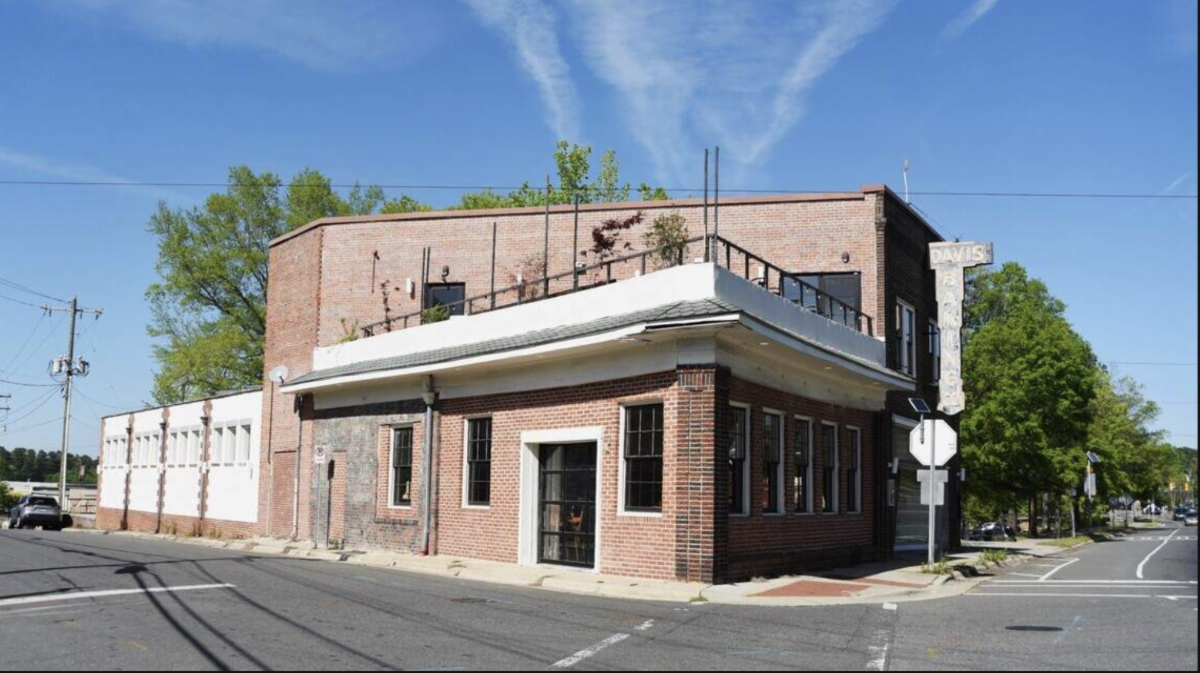
A few days ago I saw a post on Instagram that Lula and Sadies closed. Their restaurant was located in a very cool building, the old Davis Baking Company building, near my house. This one especially hurt because I have history with the owner. They used to park their food truck outside of the bar I worked at in Raleigh when I first moved back to the Triangle and we became friendly over the years. I was so excited when they opened their brick and mortar restaurant right down the street from my house.
They were in that space for four years and guess what? I never went. I drove past it a thousand times and told myself I would go. Has the ever happened to you? When I saw they closed, I felt guilty. Like I'd let them down.
Every time we go out to eat, or grab a coffee or an ice cream, we are voting with our dollars on the types of businesses we want to thrive in our city. Studies have shown that independent retailers circulate 3x more money in the local economy compared to chains. We are supporting the owners and their employees. We are promoting opportunity from within and keeping money in our community. Obviously, Lula and Sadies didn't close because I never took my family there for dinner. My meal wouldn't have solved the myriad of factors that went into their decision. That being said - it doesn't work to only celebrate and pine for local business after they've closed.
So my challenge to you is to vote with your dollars. Share your favorite locally owned businesses with your friends. Order from them directly as oppose to Door Dash. Get to know the owner. Use a local restaurant for your next catering event. Because home is so much more than just a house. Home is the buildings, the trees, the barista that knows your name.
Be smart. Be safe. Be content. Have a wonderful find,
Cory
|